THE TEACHING CONNECTION
The reduced form of a coenzyme involved in cellular energy reactions.
What it does
The reduced form of a coenzyme involved in cellular energy reactions.
How supplementation is approached
NADH belongs to cellular-energy chemistry, but taking it is a separate decision from identifying why someone is fatigued. Dr. Purser’s general mitochondrial approach reviews sleep, nutrition, redox findings and other clinical factors before adding an energy-support product; the materials do not supply a NADH-specific public regimen.
What symptoms can—and cannot—tell you
There is no established dietary deficiency syndrome for this specific botanical or compound. Symptoms are not evidence that you need this supplement.
Food sources
The body produces and recycles NADH. Food content is not a guide to supplemental need.
Supplement forms
Reduced nicotinamide adenine dinucleotide (NADH) products differ from niacin, nicotinamide and NAD precursor formulas.
What to track and reassess
Record the exact preparation and whether the defined energy goal changes. Avoid introducing several stimulating or energy products at the same time.
From starting support to follow-up
If you and your clinician start a CMA replenishment plan, you may add one new product at a time, often waiting 3–7 days to see how you feel. A check-in is usually planned near ten weeks during an approximately 100-day period. Follow your written plan for amounts and timing. At follow-up, you may continue, change, or stop each item. This timetable does not automatically end longer-term support.
Names you may see
NADH
EXPLORE WITH YOUR CARE TEAM
Supplements to explore
Compare the products below, including their ingredients and available forms. Your care team can help you choose one or more options for your needs.
SUPPLEMENT OPTIONS
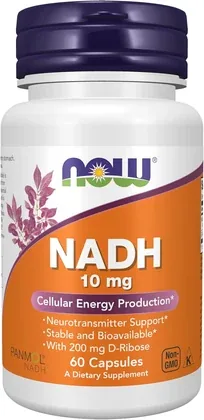
NADH
Compare supplement options related to NADH.
Different products offer different forms and amounts. Compare the labels with your clinician to find what fits your needs.
Tell your care team which supplements and medicines you already take. Check the product page for current ingredients, prices, and availability.