…one is inert once it connects to whatever toxin or whatever oxygen molecule whatever it can whenever it connects it's done it's spent unless it goes through a redux cycle and if you have the genes that if you have gene snips that reduce you…
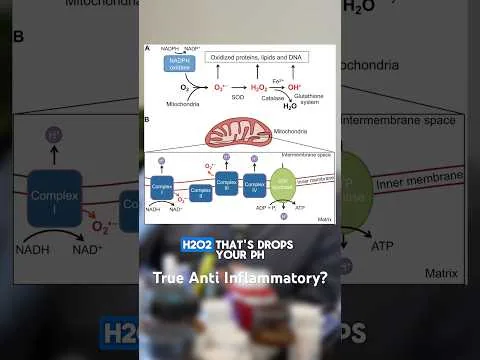
…ants as a byproduct of that. We make ATP, we make water and oxygen. But sometimes some of those oxygen molecules are supercharged. They become super oxides. So our body uses enzymes called super oxide dismutace to stabilize. What it does is…
…ants as a byproduct of that. We make ATP, we make water and oxygen. But sometimes some of those oxygen molecules are supercharged. They become super oxides. So our body uses enzymes called super oxide dismutase to stabilize. What it does is…
… we keep our glutathione uh stable de deoxxygenated because oxygen will will um will ruin glutathione. So we doesn't see air and the water we put it in um eventually it has to have no air in it. We remove the air the free air from it. On an…
… Um we keep our glutathione stable de deoxxygenated because oxygen will will um will ruin glutathione. So we doesn't see air and the water we put it in um eventually it has to have no air in it. remove the air, the free air from it. On and …
…ughout that whole process we put off a lot of free floating oxygen and those are the free radicals those are the the oxidants that are happen that just come about as this normal process that then cause damage within the mitochondria within …
…te. It dismutes super oxides. Super oxides are these little oxygens missing two electrons. They're incredibly unstable. So, weirdly enough, they vibrate all the time. They're like perpetual motion machines which aren't supposed to exist phy…
…ated. Super oxides are created as well as well as plain old oxygen and water. But a lot of those oxygen molecules get supercharged and that's why they are dangerous and our body as a whole system of defense protect against those. But again,…
…cond most potent antioxidant in your body. Super oxides are oxygen molecules minus two electrons and they're everywhere in your body. They're everywhere in every animal. And they cause massive damage and destruction wherever they go. Think …
…sucks up the H2O2 and converts it into H2O and O2 water and oxygen. So, it makes it harmless or actually beneficial in that way too. Try the sod if you have a lot of information just for fun. Um, we got big plans for it this next year. What…
…ormone evaluation.
Understand the connection
Iron supports oxygen delivery and enzymes involved in metabolism. Too little or too much iron can affect health, so iron status deserves its own evaluation.
Follow the pathway
Dr. Purser discus…
Search looks for your words in titles, descriptions, available articles, learning guides, and video captions when available. The closest matches appear first. Duplicate posts are grouped, with links to other places you can read or watch them. Books, chapters, and reports have topic guides here; the original files and full book text are not available in this encyclopedia. Subscriber posts include a title and public summary; open Substack to read the full post.