THE TEACHING CONNECTION
MIP-1 beta and overlapping recruitment signals
MIP-1 beta and overlapping recruitment signals
CCL4 encodes MIP-1 beta, a chemokine involved in attracting immune cells. It participates in a recruitment network that includes CCL2, CXCL8 and related chemokines.
Putting the pieces together
Dr. Purser connects CCL4 with late-phase allergic activity and with the vascular inflammatory network discussed in his homocysteine model. The updated panel removes a previously misassigned marker, rs11079929; it should not be treated as a CCL4 result. The teaching connection remains useful without that erroneous mapping.
Where the VARS Triad and MTHFR Daily fit
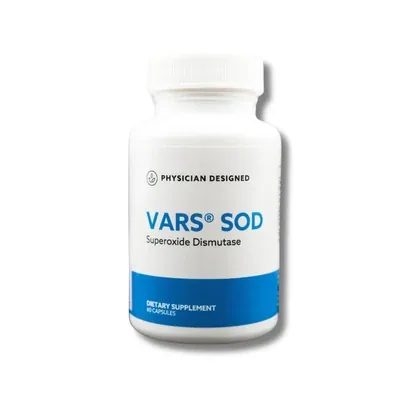
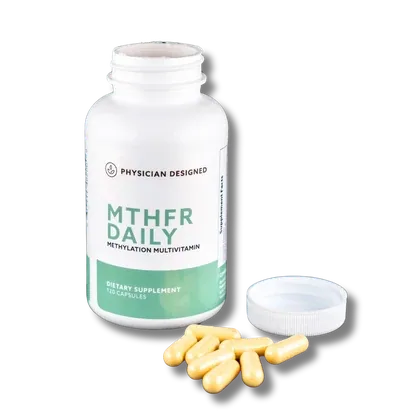
If you are exploring homocysteine or cytokines, Dr. Purser may discuss MTHFR Daily and the VARS Triad: VARS Glutathione, VARS SOD, and VARS Catalase. He gives glutathione a central place in his approach to antioxidant support.
A gene result alone cannot tell you that you need these products or that they will treat a condition. Review your current results, medicines, goals, and tolerance with your clinician before choosing a product or dose.
A question to bring to your visit
Has the gene-to-variant mapping been checked, and what clinical allergic or vascular findings are relevant?
Variant lookup
These names can help you find an entry on your original genetic report. Seeing a name here does not tell you whether it affects your health or whether you need treatment.
Names you may see
MIP-1 beta · MIP-1β
EXPLORE WITH YOUR CARE TEAM
Supplements to explore
Compare the products below, including their ingredients and available forms. Your care team can help you choose one or more options for your needs.
Explore supplements Dr. Purser discusses alongside inflammation and antioxidant support.
CAPSULES & LIQUID
Glutathione options
Choose between capsule and liquid forms with your clinician.


SUPPLEMENT OPTIONS
VARS SOD
Ask your clinician how this option fits your results and current medicines.
SUPPLEMENT OPTIONS
VARS Catalase Support
Ask your clinician how this option fits your results and current medicines.

COMPARE YOUR OPTIONS
Methylation support
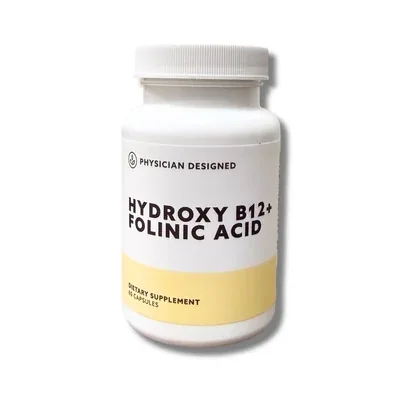
MTHFR Daily and Hydroxy B12 + Folinic Acid are alternatives. Your results can help your clinician choose between them.
Tell your care team which supplements and medicines you already take. Check the product page for current ingredients, prices, and availability.
