Why this matters
Understand why homocysteine became a health topic and why lowering a blood number is not the same as preventing disease.
How the pieces connect
Homocysteine can be measured in blood. Researchers have also studied diet and vitamins that may change it. Ask whether a study measured the blood number or an actual health outcome.
A marker, a mechanism and an outcome
Three different questions run through the history in this discussion. A marker is something researchers can measure, such as blood homocysteine. A mechanism is an explanation for how it might participate in disease. An outcome is what happens to a person, such as having a stroke. Finding an association between a marker and an outcome does not show that changing the marker changes the outcome. That distinction explains why promising early research can lead to mixed clinical-trial results.
Keep in mind
A possible connection in the body does not prove that a treatment improves health. Compare what was studied with your own results and talk with your clinician before changing care.
A question for your next conversation
Did the study measure homocysteine, or did it measure fewer cardiovascular events?
BUILD YOUR UNDERSTANDING
A few concepts, made clearer.
L-Methionine
An amino acid used in protein synthesis and other metabolic processes.
Read the full referenceMTHFR
Makes an enzyme that helps produce a form of folate used in the processing of homocysteine. Common variants are different from rare variants that cause severe MTHFR deficiency.
Read the full referenceLET YOUR CURIOSITY LEAD
One idea opens another.
Choose a subject to find the related teaching across videos, articles, courses and references.
EXPLORE WITH YOUR CARE TEAM
Supplements to explore
Compare the products below, including their ingredients and available forms. Your care team can help you choose one or more options for your needs.
Explore supplements Dr. Purser discusses for methylation and antioxidant support.
COMPARE YOUR OPTIONS
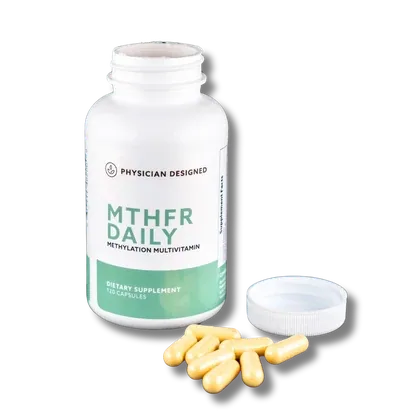
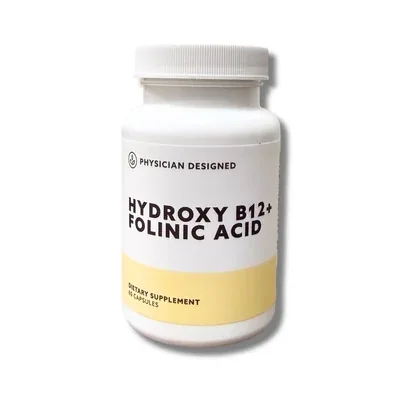
Methylation support
Dr. Purser discusses these supplements in relation to MTHFR.
MTHFR Daily and Hydroxy B12 + Folinic Acid are alternatives. Your folate, vitamin B12, and genetic results can help your clinician choose between them.
SUPPLEMENT OPTIONS
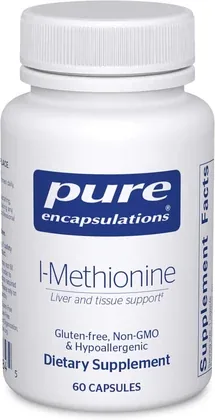
L-Methionine
Compare supplement options related to Methionine.
Different products offer different forms and amounts. Compare the labels with your clinician to find what fits your needs.
SUPPLEMENT OPTIONS
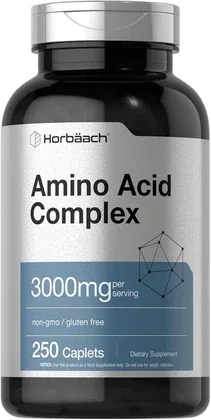
Amino Acid Complex
This formula brings several nutrients together in one supplement.
An amino acid complex may be considered when your test shows a need for at least four different amino acids. Cysteine, taurine, and tryptophan are considered separately.
CAPSULES & LIQUID
Glutathione options
Choose between capsule and liquid forms with your clinician.


See more supplement options
SUPPLEMENT OPTIONS
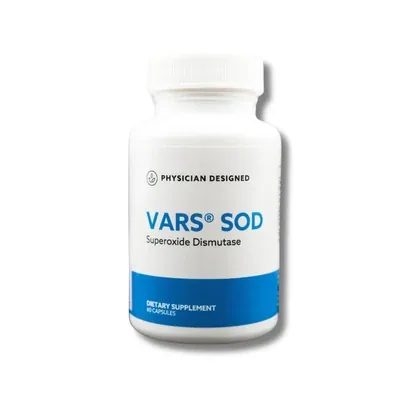
VARS SOD
Ask your clinician how this option fits your results and current medicines.
SUPPLEMENT OPTIONS
VARS Catalase Support
Ask your clinician how this option fits your results and current medicines.

Tell your care team which supplements and medicines you already take. Check the product page for current ingredients, prices, and availability.
